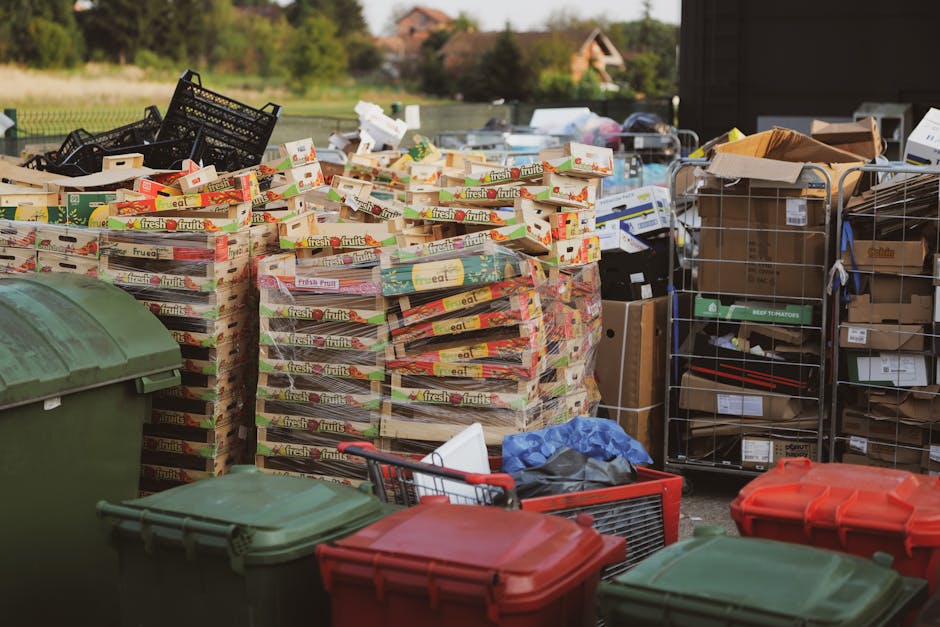
Tower Hamlets council rules for skip and rubbish disposal: a practical local guide
If you're planning a clear-out in Tower Hamlets, the rules around skips and rubbish disposal can feel oddly specific at first. One minute you're sorting a flat in Whitechapel, the next you're wondering whether a skip needs a permit, whether a bag of rubble counts as builder's waste, or what happens if the council treats your pile of rubbish as fly-tipping. It's a familiar headache, and to be fair, most people only start looking into it when they're already halfway through a job.
This guide breaks down Tower Hamlets council rules for skip and rubbish disposal in plain English. You'll learn how the process usually works, when a skip is the right option, when a collection service makes more sense, and what mistakes are most likely to cause delays or extra cost. We'll also cover practical compliance points, useful decision-making tips, and a realistic example from an everyday local clearance job. No waffle. Just the stuff that helps you get the job done properly.
Why Tower Hamlets council rules for skip and rubbish disposal Matters
The short answer? Because waste doesn't disappear just because you've finished your renovation, garden tidy-up, or office clear-out. In Tower Hamlets, as in the rest of London, rubbish has to be stored, moved, and disposed of in ways that avoid obstruction, nuisance, contamination, and illegal dumping. If you ignore the rules, you risk hold-ups at the kerb, complaints from neighbours, or a job that costs more than it should.
That matters even more in busy parts of the borough where space is tight. Think narrow streets near Whitechapel, apartment blocks in Poplar, or mixed-use streets around Canary Wharf. When access is awkward, a small mistake with skip placement or rubbish storage can become a big, annoying problem. Nobody wants a skip blocking sightlines, a bin bag spill after rain, or a neighbour annoyed before the day has even started.
There's also a bigger point. Proper disposal is part of good neighbourhood behaviour. It protects pavements, reduces pests, keeps streets safer for pedestrians, and helps prevent waste from ending up where it shouldn't. Not glamorous, obviously, but important.
Expert summary: In Tower Hamlets, the best waste plan is usually the one that matches the job size, street access, and waste type first - then the price. If you get those three things right, everything else is easier.
How Tower Hamlets council rules for skip and rubbish disposal Works
At a practical level, the process comes down to three questions: what waste do you have, where will it sit before collection, and who is legally responsible for it once it leaves your property. That's the bit people often miss. The waste is still your responsibility until it's handled by a proper carrier and taken to an authorised facility.
For many domestic jobs, you'll choose between a skip and a direct rubbish collection. A skip is often suited to ongoing work, larger volumes, or heavier loads like rubble, soil, and mixed builder's waste. A collection service tends to suit one-off clearances, tighter access, or jobs where you want the waste gone in a single visit. If the waste is being removed from a flat, a basement, or a property with no safe roadside space, a collection can be far simpler. Services such as flat clearance or home clearance are often chosen for exactly that reason.
In Tower Hamlets, the rules you need to think about usually include:
- where the skip can be placed without causing an obstruction
- whether a permit or permission is needed for placement on public land
- what types of waste can go in the container
- how the load must be secured so nothing falls out during transport
- how quickly the waste is removed once it is full
There is a real difference between "I've got some rubbish to clear" and "I've got a compliant waste plan". That sounds a bit formal, but it saves hassle. If you are dealing with domestic clutter, broken furniture, or bulky items, a service like rubbish collection or furniture disposal may fit better than hiring a skip and waiting around.
For commercial premises, the same idea applies, just with more moving parts. Offices, shops, and landlords often need recurring or scheduled collections, especially when waste volumes are steady rather than occasional. That is where business waste and office clearance come into the picture.
Key Benefits and Practical Advantages
Following the rules is not just about avoiding penalties. It often makes the whole job smoother, faster, and less stressful. Strange as it sounds, compliance can save time.
- Fewer delays: If the placement and waste type are right from the start, there is less back-and-forth.
- Better access management: This is especially useful in dense streets and shared driveways.
- Cleaner workspaces: Waste stays where it should, rather than spreading across the site.
- Lower neighbour friction: Less mess, less noise, fewer complaints.
- Safer handling: Good disposal practices reduce trip hazards, sharp edges, and spill risk.
- More accurate pricing: Once the disposal method is clear, it is easier to estimate the job properly.
There is also a practical planning benefit. For example, if you are clearing a garden in Bethnal Green and the waste is mostly green material, the plan will be different from a bathroom rip-out in Stepney or a sofa-and-cupboard clear-out in Bow. That sounds obvious, but people mix these jobs up all the time.
When you use the right disposal route, you also avoid over-ordering. A half-full skip sitting outside for days is rarely the smartest solution if all you needed was one collection. On the other hand, if you are removing heavy spoil from a small refurbishment, a grab-and-go collection may not be enough. Matching the method to the waste is the real win here.
Who This Is For and When It Makes Sense
This topic is relevant to a lot more people than you might think. It is not just for builders or landlords. In Tower Hamlets, the demand often comes from everyday situations: moving house, emptying a rental, replacing furniture, clearing a garage, or sorting out leftover waste after repairs.
You probably need to pay attention to the council rules if you are:
- a homeowner doing DIY or a room renovation
- a tenant leaving behind bulky waste or accumulated clutter
- a landlord between tenancies
- a small business clearing packaging, fixtures, or office furniture
- a tradesperson generating builder's waste
- someone dealing with a sudden garage, loft, or garden clean-up
For small domestic jobs, a straightforward rubbish removal service may be all you need. For example, a broken wardrobe, old mattress, and a couple of bags of general waste usually belong in a collection, not a skip. For larger clear-outs, such as a full house emptying or a long-overdue garage reset, services like house clearance or garage clearance can make the process much simpler.
Garden jobs are another common one. Branches, soil, turf, fencing, and plant waste all behave differently in terms of weight and handling. If that sounds fiddly, well, it is a bit. That is why a dedicated garden clearance approach often works better than trying to improvise with mixed rubbish.
If you are in a flat, shared block, or a street with little kerb space, this becomes even more relevant. In those cases, access and timing matter nearly as much as the waste itself.
Step-by-Step Guidance
Here is a practical way to tackle skip and rubbish disposal in Tower Hamlets without turning it into a weekend saga.
- Sort the waste by type. Separate furniture, general rubbish, rubble, green waste, and anything hazardous or specialist. The more mixed the load, the trickier the plan becomes.
- Estimate the volume realistically. People often underestimate. A few bags quickly become a car-load, and a car-load becomes a small mountain. Happens all the time.
- Check access early. Measure doorways, stairwells, lifts, pavements, and any tight turns. If a skip cannot be placed safely, a collection may be better.
- Decide whether a skip or collection suits the job. For heavy, ongoing works, a skip may help. For one-off clearances or limited space, a direct removal service may be more sensible.
- Confirm what can and cannot go in. Not all waste types are treated the same. Mixed loads, plasterboard, soil, electrical items, and certain bulky materials may need separate handling.
- Plan the timing. Avoid leaving waste out longer than necessary. If you are using rubbish removal, line up the collection once everything is ready.
- Keep the area tidy and safe. Stack waste neatly, cover anything lightweight, and keep pathways clear.
- Get proof of proper disposal. For commercial waste especially, keep records and make sure your carrier is legitimate.
If you are dealing with construction debris, a dedicated builders waste service is often the cleaner option. It handles the sort of material that tends to cause the most confusion: broken tiles, timber, packaging, plaster fragments, and the odd mystery off-cut that somehow ends up everywhere.
For people clearing a home from top to bottom, a broader waste clearance or waste removal service can be more efficient than piecing together several smaller arrangements. That is especially true when time is tight or the property has to be handed back quickly.
Expert Tips for Better Results
A few small choices can make a surprisingly big difference. These are the practical habits that tend to separate a smooth job from a messy one.
- Don't mix everything together unless you have to. Segregated waste is easier to move and often easier to price.
- Think about weight, not just size. A container full of rubble behaves very differently from one full of cardboard.
- Use the cleanest route out of the property. One hallway full of broken plasterboard dust is enough for anyone.
- Take photos before collection. Especially useful for landlords, agents, and businesses.
- Choose a service that fits the access. Flats, terraced streets, and rear-garden access all need different handling.
One thing we notice often is that people focus on the visible pile, not the route from pile to vehicle. That route is the whole game. If there is a flight of stairs, a narrow alley, or a shared entrance, the disposal method should reflect that. It sounds simple. In practice, it is where many jobs go slightly sideways.
If you need a single-item removal, such as a sofa or mattress, a dedicated service can save a lot of effort. For example, sofa removal is usually better than hiring a skip for one bulky item. And if you are dealing with mixed domestic junk, rubbish clearance gives you a more flexible option than trying to guess container size yourself.
Also, be realistic about your own lifting ability. There is no prize for trying to drag a wardrobe down two tight flights of stairs at 8am on a rainy Tuesday. Honestly, the wardrobe usually wins.
Common Mistakes to Avoid
Most disposal problems are boringly avoidable. That is the good news. The bad news is that they are common because people rush.
- Assuming all waste is the same. It isn't. Green waste, builders' debris, and general household rubbish need different handling.
- Leaving waste in a place that blocks access. This can lead to complaints or removal issues.
- Overfilling containers or creating unstable stacks. Loose waste is a transport hazard.
- Using the wrong disposal route for the property type. A flat clear-out and a garden clearance rarely need the same setup.
- Ignoring business record-keeping. Commercial waste is not something to leave vague.
- Forgetting about awkward items. Wardrobes, mattresses, broken tables, and old office chairs can take more effort than expected.
Another common slip is leaving a job half-finished and then expecting the collection crew to somehow know what is staying and what is going. That creates delays and, sometimes, extra handling. It is much easier to separate everything before the team arrives.
If you are clearing a shared or rented property in Tower Hamlets, remember that neighbours, building managers, and landlords may all have a view on timing and access. Quick communication is simple, but it saves a lot of awkward knocking on doors later.
Tools, Resources and Recommendations
You do not need a huge toolkit for waste disposal, but a few basic items make things easier and safer:
- heavy-duty refuse sacks
- gloves with a decent grip
- tape, straps, or wraps for securing loose items
- a tape measure for access points and large furniture
- a torch for dark lofts, basements, or rear yards
- a simple notepad or phone notes list for separating waste types
For many people, the most useful "resource" is not a tool at all but a clear plan. Decide what is being removed, what stays, and what needs special handling before anyone starts lifting. That alone prevents a lot of confusion.
If you are clearing a workplace, look at business waste alongside office clearance. If you are dealing with commercial stock, packaging, or recurring waste, those services are usually more suitable than ad hoc disposal. For ongoing general rubbish needs, waste collection is often the most straightforward route.
And if you are comparing disposal methods because you are not sure what the job really needs, start with the access. That one factor often narrows the decision faster than anything else.
Law, Compliance, Standards, or Best Practice
Waste disposal in the UK is not just a practical issue; it is also a compliance issue. You are expected to store and transfer waste responsibly, avoid nuisance, and use legitimate disposal routes. For businesses, the standards are even more important because records, duty of care, and carrier legitimacy matter. For households, the main point is simpler: do not leave waste where it causes a hazard, obstruction, or environmental mess.
In plain English, best practice usually means:
- use a lawful waste carrier for removal
- do not dump anything on pavements, verges, or in communal areas
- keep waste secure before collection
- separate hazardous or unusual materials
- make sure the disposal method suits the location
For Tower Hamlets, local conditions matter too. Busy roads, resident parking pressure, restricted access, and dense housing mean a technically legal plan can still be a poor practical choice if it disrupts the street. That is why many people prefer a direct collection over a roadside skip, especially for smaller or mid-sized loads.
Compliance is not about being fussy. It is about avoiding trouble that is easy to prevent. Once you understand that, the rules feel much less intimidating.
Options, Methods, or Comparison Table
Here is a simple comparison to help you choose between common disposal approaches in Tower Hamlets.
| Method | Best for | Strengths | Watch-outs |
|---|---|---|---|
| Skip hire | Ongoing renovation, heavy builder's waste, larger volumes | Good for continuous loading, handles bulky waste well | Needs space, may need permission or permit, can be awkward in tight streets |
| Rubbish collection | One-off clear-outs, mixed household junk, flats and limited access | Fast, convenient, less disruption | May be less ideal for very heavy waste or long-duration work |
| Waste clearance | General home, garage, or mixed-property clearances | Flexible, broad-use, often easiest for households | Needs accurate sorting and clear instructions |
| Specialist removal | Single bulky items such as sofas or furniture | Efficient for one-off items, avoids overkill | Not always suitable for large mixed loads |
If you are still torn, ask yourself one simple question: am I moving a controlled volume of heavy waste, or am I just trying to get a lot of stuff out of the property quickly? That usually tells you whether skip hire or collection makes more sense.
Case Study or Real-World Example
Here is a realistic example. A landlord in Tower Hamlets had a two-bedroom flat to turn around between tenants. The property contained a broken sofa, an old wardrobe, several bags of general rubbish, some kitchen bits, and a few odds and ends from storage. The first thought was skip hire. After a look at the building access, though, that plan became less attractive very quickly.
The street was tight, the block had shared entry space, and there was no easy roadside layby. Leaving a skip there would have meant extra pressure on neighbours and a lot of unnecessary hassle. Instead, the waste was sorted, the bulky items were separated, and the job was handled as a flat-focused collection. The sofa and wardrobe were removed first, then the remaining rubbish was cleared in one go. Simple, but effective.
The benefit was not just speed. The property was left clear without turning the hallway into a storage zone for half a week. The landlord could hand the keys over faster, the neighbours were not disturbed, and the whole thing felt, well, less chaotic.
That is the real lesson. In Tower Hamlets, the best waste solution is often the one that respects the building as much as the rubbish.
Practical Checklist
Use this quick checklist before you book anything or start moving waste outside.
- Have I identified exactly what type of waste I have?
- Do I know whether it is household, garden, builder's, or business waste?
- Is there enough access for a skip, or would a collection be easier?
- Have I separated bulky items like furniture or a sofa?
- Have I checked whether anything needs specialist handling?
- Will the waste sit somewhere safe until it is collected?
- Have I kept pathways, entrances, and communal areas clear?
- Do I need a one-off service or recurring support?
- Have I chosen a disposal method that suits the size of the job?
- Am I ready to keep records if this is commercial waste?
If you can tick most of those boxes, you are already ahead of most people. Truth be told, waste problems usually become expensive when they are treated as an afterthought.
Conclusion
Tower Hamlets council rules for skip and rubbish disposal are really about common sense with a local twist: keep waste safe, choose the right method, respect tight access, and make sure everything ends up where it should. Once you understand the basics, the whole process becomes much less stressful.
For some jobs, a skip is the right answer. For many others, especially flats, one-off clear-outs, or awkward streets, a direct collection or clearance service is the better fit. The important thing is not to overcomplicate it. Match the method to the waste, keep the area tidy, and stay on the right side of the rules. That is usually enough.
And if you are staring at a pile of stuff right now and thinking, "Right, where do I even start?" - start small, sort first, and then choose the cleanest route. It really does get easier from there.
Get a free quote today and see how much you can save.
Frequently Asked Questions
Do I need permission for a skip in Tower Hamlets?
It depends on where the skip will sit. If it is on private land, the position may be straightforward. If it is on the public highway or another shared space, permission or a permit may be needed. The safest approach is to confirm the placement before you book.
What is the difference between skip hire and rubbish collection?
Skip hire is usually better for ongoing, heavier, or larger projects where waste builds up over time. Rubbish collection is often better for one-off clear-outs, flats, or tight-access properties where you want everything removed in a single visit.
Can I put furniture in a skip?
Sometimes, yes, but it depends on the waste mix and the service provider's rules. For one sofa or a few furniture items, a specialist option like sofa removal or furniture disposal is often more efficient than hiring a full skip.
What happens if I leave rubbish outside on the street?
Unattended rubbish can be treated as a nuisance or worse, especially if it blocks access or starts to spread. In a busy borough like Tower Hamlets, it is better to use an arranged collection rather than leaving waste out and hoping for the best.
Is builder's waste treated differently from household rubbish?
Yes, usually. Builder's waste is heavier, more mixed, and often needs more careful handling. Materials like rubble, timber, plaster, and packaging are common in these jobs, which is why a builders waste service is often the better route.
What if I live in a flat with no easy parking?
That is one of the strongest reasons to choose a collection or clearance service instead of a skip. In flats, the real issue is often access rather than volume. A service designed for flat clearance can save a lot of bother.
Can businesses just use the same rubbish disposal method as households?
Not really. Businesses should be more careful with records, waste types, and duty of care. Business waste and office clearance arrangements are usually better suited to commercial premises than ad hoc disposal.
How do I know if a waste carrier is legitimate?
You should expect a proper, professional approach, clear terms, and sensible documentation where relevant. If anything feels vague, rushed, or too casual, pause and ask more questions. Good waste handling should not feel mysterious.
What should I do with garden waste in Tower Hamlets?
Small amounts of green waste can often be handled simply, but larger loads, soil, turf, branches, and mixed garden materials may need a dedicated garden clearance or waste clearance solution. The volume and weight matter more than people expect.
Can I mix electrical items with general rubbish?
Usually, no. Electrical items often need separate handling. Mixing them into general waste can create compliance issues and complicate disposal. If you are unsure, keep them aside until you can confirm the right route.
Is a skip always cheaper than a collection?
Not necessarily. A skip can be useful for larger or longer jobs, but if you only have a moderate amount of waste or poor access, a collection may be better value overall. The cheapest option on paper is not always the cheapest in real life.
What is the smartest first step if I'm overwhelmed by the amount of rubbish?
Start by separating waste into rough categories: furniture, general rubbish, garden waste, and building debris. Once that is done, the choice between skip hire and rubbish removal becomes much clearer. A bit of sorting upfront saves a lot of stress later.